

Cloud contact centers are becoming wildly popular, and it’s important for business leaders to know how they work and what their benefits are!
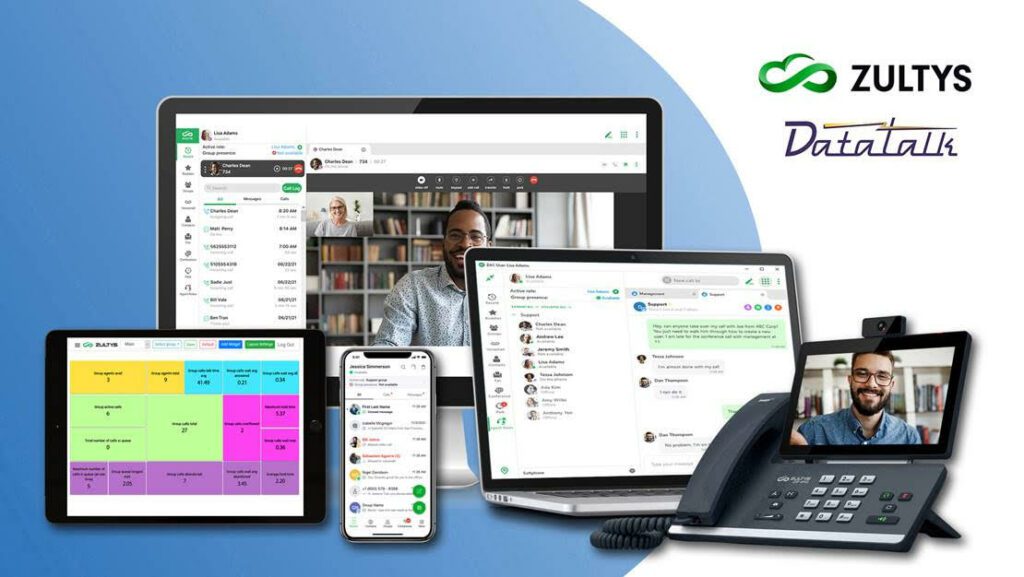
Multichannel customer interactions are being revolutionized by Cloud contact center developments, and it’s expected that the Cloud contact center market will increase from where it is today at $27 billion to a whopping $87 billion by 2030.
This means that business leaders everywhere can no longer ignore the growing popularity of Cloud-based telecom services, because not preparing today will inevitably lead to following behind your competition tomorrow.
Here at Data Talk, we pride ourselves on being a top-rated telecom provider that helps business teams to reduce capital costs and improve workplace efficiency by shifting from traditional on-premises phone systems to Cloud models. Below we’ll be providing in-depth details about what Cloud contact centers are, how they work, and their many benefits to companies of all sizes!
What Exactly is a Cloud Contact Center?
Cloud contact centers essentially are a Web-based platform that provides companies with Unified Communications solutions through a single interface.
This means that your team will be able to send emails, make phone calls, conduct live chats, monitor social media channels, and a lot more—all within one, comprehensive software program.
Most Cloud contact centers are operated via third-party servers like Data Talk’s state-of-the-art technology, and this gives organizations an added boost of affordability, scalability and flexibility!
How Do Cloud Contact Centers Work?
It’s important to remember that Cloud contact centers are entirely operated online, and your team’s software will actually be hosted on the Data Talk servers. This means that we’ll take care of all the time-consuming, necessary tasks like data storage, call handling and software upgrades.
And what’s really great about Cloud contact centers is that your team’s call agents will easily be able to handle your client interactions through their own personal mobile devices, desktop computers or tablets. This type of VoIP technology truly is the future of the telecom industry, and it’s only getting increasingly more popular as more companies transition to hybrid and remote work settings.
Here’s a quick overview of how Cloud contact centers function:
Call Routing
Call routing is undoubtedly one of the primary functions of a Cloud contact center, and this feature is great because it efficiently routes your customer calls to a suitable call agent based upon certain criteria. Some of the factors that can be the basis of call routing criteria include:
- Skill Level: You can coordinate your call center’s routing to ensure that the most qualified agents are receiving queries based upon factors like product knowledge, relevant field, technical competency, language proficiency, and much more!
- Department: Calls can also be routed based upon a customer’s specific needs, and this particularly applies to different departments within your company like sales inquiries, technical support, billing assistance, etc.
- Agent Availability: This is another great routing technique, because it ensures that your callers aren’t waiting for too long.
Omnichannel Integration
Another huge benefit of Cloud contact centers is supporting omnichannel, Unified Communication integrations. This means that your business will operate within one interface for things like SMS, live chat, emails, voice calls and social media.
Your team members will also be able to seamlessly transition from one channel to the other, which helps guarantee faster response times and smoother customer experiences.
Real-Time Monitoring
Supervisors also have more control within Cloud contact centers through real-time monitoring tools.
This means that supervisors can listen in on live calls, whisper/coach agents during live calls, can easily enter calls, and can record calls.
Analytics & Reporting
Cloud contact centers also offer improved reporting and analytics features, which means that the system will gather valuable information during client interactions in order to further develop your team’s Customer Relationship Management (CRM) database.
Some crucial key performance indicators (KPIs) that are tracked within Cloud-based systems include:
- First Call Resolution
- Average Handle Time
- Conversion Rates
- Agent Performance
- Queue Times
Awesome Benefits of Cloud Contact Centers
There are many benefits associated with investing in a Cloud contact center, including improved productivity and overall customer support.
Below are some of the main benefits of Cloud contact centers that business leaders should keep in mind:
Scalability
Cloud contact centers make it seamless for businesses to scale their operations based upon their unique needs—all without needing additional hardware investments.
Flexible scaling is a huge relief for a lot of businesses, particularly those that grow during peak seasons!
Cost-Effectiveness
Software, hardware and infrastructure investments often come with significant installation costs for traditional contact centers, but this is no longer the case with Cloud-based technology.
Companies can now move on from expensive IT maintenance staff and hardware investments by investing in a hosted, Cloud contact center that’s managed by an affordable, third-party provider like Data Talk that offers all sorts of economical options.
Seamless Implementation
With traditional contact centers, it can take several weeks or even months to complete the overall installation and configuration of telecom equipment; however, with Cloud-based contact centers, this transition takes only a matter of a few hours.
Companies of all sizes can improve their overall efficiency when they transition to the Cloud, and this is especially the case when it comes to implementing new technologies and system features!
Remote Flexibility
It’s now easier than ever for call agents to work remotely when companies transition to Cloud contact centers, and this offers the type of flexibility that a lot of people prefer these days.
Cloud technologies are also useful for hybrid work environments as well, and there’s simply no denying the advantages associated with accessing a widespread workforce of top-quality customer service talent!
Customer Experience Improvements
There are many ways that Cloud contact centers can improve your company’s overall customer experience, including popular features like skill-based call routing that help with customer satisfaction and resolution times.
And when you combine your Cloud technology with CRM connectivity, you can further improve your customer interactions—which can go a long way for your brand’s reputation!
Reach Out To The Data Talk Team To Learn More About How You Can Create A Cloud Contact Center At Your Company!
Data Talk is a renowned telecom service provider that stands out from the industry through our flexible, feature-rich Cloud platforms.
We’re a top-rated option for companies that are looking to update their contact center infrastructure and technology, and we pride ourselves on providing advanced features, transparent pricing and reliable customer support.
Reach out to us online or give us a call at 614-784-7100 to learn more about how we can support your company’s transition to the Cloud!
Recent Comments